Just Seven Things

Exploring why and how we do what we do, and how we can do it better

Archive for the category “NLP”

NLP and Company Growth Enhancement

Read another great review in the FT of a book that’s now on the list. Stall Points. Most Companies Stop Growing – Yours Doesn’t Have To by Matthew Olsen and Derek van Bever.

Apparently it’s about learning from the mistakes some of the biggest companies made: Daimler-Benz, IBM, Toshiba, Levi Strauss that lead to their revenues to stall.

As well as four main reasons driving more than half the growth failures:

‘“premium position captivity” – the failure to change tactics in response to the advent of a low-cost competitor or changing customer preference; “innovation management breakdown” – failure to achieve desired or required returns on investments in new products or services; “premature core abandonment” – failure to exploit growth opportunities in the “core franchise” or to adjust the business model to meet new competitive requirements; and “talent bench shortfall” – lack of adequate leaders and staff with the skills and capabilities for successful strategy execution.’ – FT,

the authors apparently identify ‘stale thinking, based on “mental models” that no longer apply. Abandoning long-held beliefs, resisting the seductive perils of denial, proves difficult for many business leaders’

I was running one of our Ideas and Learning Project courses at Madgex today… Read more…
Consumers, Brands and the Unconscious

I’ve just been reading a review of a book called Marketing Metaphoria by Gerald and Lindsay Zaltman.

Their website explains that ‘In some twelve thousand in-depth interviews for more than a hundred clients in over thirty countries, seven deep metaphors have surfaced with the greatest frequency in every [business] sector- finance, food, transportation, and so forth- and in every country, regardless of the research team.

People who otherwise differ in cultural background, age, gender, education, occupation, political values, consumer experiences, basic beliefs, religious preference, and almost anything else we can name share these seven giants:

  1. Balance
  2. Transformation
  3. Journey
  4. Container
  5. Connection
  6. Resource
  7. Control’

So the book’s on order because for me, I can’t wait to discover how these deep metaphors – so effectively filters, values or beliefs – can be shared across humankind if not from a deeper history or structuring.

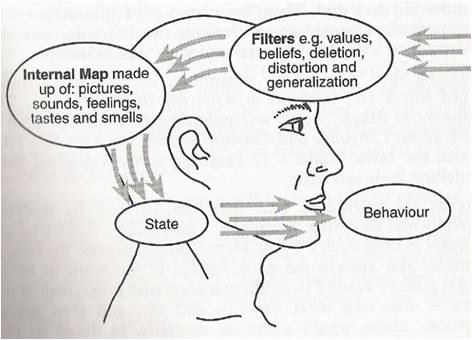
What got me really excited in the Financial Times review was that ‘the Zaltman’s  explain that “deep metaphors” are “unconscious viewing lenses” that help us to structure what we think, hear, say and do’

So in NLP terms, it sounds like the existence of pre-loaded or early-formed metaprogrammes? So if businesses or advertisers play to, and align with these ‘giants’ in their advertising they have the ability to place their products within a pre-built structure.

NLP, Social Networks and Smoking

A study in the The New England Journal of Medicine used 32 years of data from 12,000 people who participated in the Framingham Heart Study. The study, launched in 1948 in Framingham, Massachusetts, has provided the strongest evidence of the links between diet, lifestyle, and heart disease.

What’s fascinating is that the researchers seemed so taken aback by the results in relation to smoking habits and the impact that one person within a social network giving up smoking has on the rest of the network.

The doctors’ analysis of the data showed that:

  • When a husband or wife quit, the chance that their spouse would smoke fell by 67 per cent;
  • When a friend quit, the chances of smoking among their other friends fell by 36 per cent;
  • In small firms, a worker quitting would reduce smoking by his or her colleagues by 34 per cent. But in big firms the effect was insignificant;
  • When a brother or sister quit, the other sibling was 25 per cent less likely to smoke.

Drs Nicholas Christakis and James Fowler suggested that: “the closeness of the relationship in the network was the key to the spread of smoking behaviours.” The quitting behaviour is not literally contagious, but a response to the changing social climate that is passed on through people who are linked.

“If there’s a change in the Zeitgeist of this social network, like a cultural shift, a whole group of people who are connected but who might not know each other all quit together,” Dr Christakis said

Taking the four pillars of Neuro Linguistic Programming (NLP):

  1. Successful Outcomes
  2. Sensory Acuity
  3. Behavioural flexibility
  4. Rapport

I would suggest that what actually happens within the social network is that all the spouses and friends and work colleagues and siblings who already had the objective or goal of giving up suddenly had a whole heap of data that they could suddenly access. This data of the whats and the hows, the behaviours and patterns. The shifts to routines and habits. The thought processes, feelings, challenges and ‘proven’ responses that enable other people to better model the successful outcome.

The successful outcome of giving up smoking.

So, simply put: when you know someone in your network who has achieved a successful outcome you desire you ask questions. You find out how they did it. You model it. And you do it yourself.

Marvellous. I wonder whether rich people hang round with other rich people because they seek them out, or because of the network effect of successful outcome modelling?

Post Navigation