Just Seven Things

Exploring why and how we do what we do, and how we can do it better

Are We Getting Better at Thinking?…and Innovating?

For all the talk of the evils of the web in terms of driving us to attention deficit/ dispersal, a few areas I’ve been reading have glued together in my head which may make a case for the opposition:

First, in a fantastic book on writing powerfully for business: We, Me, Them & It,  John Simmons makes a point, ‘For as long as I can remember I’ve used writing to sort out my thinking’

I’ve been toying round with a way of prioritising my time – personally and at work – around 5Cs: Create, Connect and Collaborate, Communicate and Consume. So in that order, I try and allocate any time I have to ensure I’m not just consuming or communicating. Since I restarted writing and refocusing on creativity nearly sixteen months ago, I’ve probably never been happier. I’ve argued to others that it makes my brain feel fresher and more flexible. The act of creation is satisfying, and I feel that I think better as a result of forcing myself to articulate things better – even when I play with words or ‘dump’ thoughts without much structure. I find this unblocks my thinking. Read more…
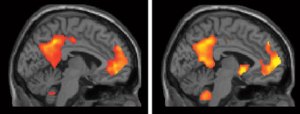
What Could You Do in The Future With Your Imagination Now?

Daniel Schacter Functional MRI Scans

Daniel Schacter Functional MRI Scans

The scans to the left look virtually identical.

The furthest left brain actually shows the bits of the brain that fire when, given a cue word, the subject remembers something that has happened: a memory.

The closest brain shows the bits of the brain that fire when the subject, given the same cue word, was asked to imagine a future scenario.

So the fact that the brain, for purposes of evolutionary efficiency – or through evolutionary limitations (depending on your view) – uses the same tools to remember the past and imagine the future, throws a fantastic light on the power of vision and goal setting.

On the basis that you believe your memories because your left brain gives you permission to do so, the only thing limiting a more ‘creative’ use of vision and goal setting is your logical/ analytical side. Looking at the argument from another perspective, do you believe that you are what/ who you are through a sum total of your nature and your nurture? Do you accept that a component part of what affects your nurture is a sum total of your experiences? Do you then accept that how you act in the present is influenced by the sum of what you believe to be you: your values, beliefs, experiences etc.?

If you’re still with me, then allow yourself to imagine the impact of acting in the present not just based on your past, but based on a future that you desire and have spent time imagining in detail.

What resources would this bring to bear? What focus would this give you? What opportunities would you take?

Using Neuroscience to Train Frankinstein Leaders?

Work has been undertaken which suggests that the behavioural and emotional qualities of leadership can be traced to neurological activity in identified regions of the brain.

In a really practical step, Pierre Balthazard at Arizona State Uni. is then working on linking this activity with the qualities that best benefit those at the top of a company to create training techniques that develop effective leadership abilities.

The FT reports on this in their article ‘A Brainwave in the Study of Leadership‘, noting that more recently leadership research has focused on more complex issues, ‘how to develop traits such as authenticity, charisma and visionary and inspirational leadership in less talented leaders’

Everything centres around evidence and belief that training (and subsequent scanning and rescanning) can show evidence of changes in signature brain patterns for certain behaviours: ‘neuro-feedback training can develop the behaviour individuals want to optimise’

Balthazard has gathered evidence he believes to be 100% accurate in determining who is  a strong leader (a bold claim….). He has also discovered that leaders with ‘high psychological capital’ – such as hope, optimism and resilience – display different brain activity.

Applications are obvious, and the US Military Academy at West Point and global management schools are looking at patterns that can be copied. It’s not surprising however that funding has been hard to find, and that there are obvious detractors (quoting 1984/ Orwellian Big Brother nightmare scenarios….)

For me, I feel intuitively that making such fundamental changes can’t be as simple as learning how to make lights flash differently on one screen to match a prescribed ‘best’ pattern on the other.

Apologies to Balthazard and his team for making such sweeping conclusions with such little evidence.  I’m sure it’s probably because I don’t want to admit that we’re absolutely as simple to change as all this. For me however, understanding; appreciation of how things overall ‘fit together’ and underlying values seem like bigger pieces of the equation of leadership excellence that cannot be trained so easily.

Post Navigation