Just Seven Things

Exploring why and how we do what we do, and how we can do it better

Archive for the tag “NLP”

The Power of As If

I went to a speech by Simon Woodroffe of Yo Sushi fame about three years ago. Fascinating guy, and he told a great number of stories about acting ‘as if’ and the power of ‘I am’ (sorry if I’m paraphrasing/ butchering what was said but they’ve percolated away since then and I think they’re important to relate)

There’s a great one about him getting continued funding for his first restaurant because the Chairman of his main supplier made an assumption about his size because of the ‘support’ from organisations like JAL, Sony, Nippon (could be making these up here – apologies). But big Japanese firms whose logos adorned the original Yo Sushi menus. The beauty of the story being that he’d written to them and said that he’d like them to be sponsors/ supporters, that no money was required., and that if he hadn’t heard from them by x time he’d assume a yes. He didn’t hear back from them but in effect their ‘support’ enabled him to survive. The power of ‘As If’.

He referred at the end of his talk to developing a box of ‘I Ams’. Numerous ways of being and acting that could be adopted when required in different situations and to achieve different objectives.  

I didn’t really make the full connection at the time about what underpinned the ‘I Ams’ and ‘As Ifs’, but since then I’ve seen more and more evidence for the huge progress to be made in achieving a goal or effecting an outcome by starting off by acting ‘As If’ or already being that ‘I Am’. The power of acting and thinking in this way provides a huge accelerant in NLP terms; especially for the core function of modelling behaviours.

I then was reminded about quotes at the back of some Beeson Gregory (now Evolution Securities) marketing literature when we were using them as brokers during the set-up of Vinopolis. One was from Aristotle Onassis:

“To be successful, keep looking tanned, live in an elegant building (even if you’re in the cellar), be seen in smart restaurants (even if you only nurse one drink) and if you borrow, borrow big”

The Power of As If
NLP and Company Growth Enhancement

Read another great review in the FT of a book that’s now on the list. Stall Points. Most Companies Stop Growing – Yours Doesn’t Have To by Matthew Olsen and Derek van Bever.

Apparently it’s about learning from the mistakes some of the biggest companies made: Daimler-Benz, IBM, Toshiba, Levi Strauss that lead to their revenues to stall.

As well as four main reasons driving more than half the growth failures:

‘“premium position captivity” – the failure to change tactics in response to the advent of a low-cost competitor or changing customer preference; “innovation management breakdown” – failure to achieve desired or required returns on investments in new products or services; “premature core abandonment” – failure to exploit growth opportunities in the “core franchise” or to adjust the business model to meet new competitive requirements; and “talent bench shortfall” – lack of adequate leaders and staff with the skills and capabilities for successful strategy execution.’ – FT,

the authors apparently identify ‘stale thinking, based on “mental models” that no longer apply. Abandoning long-held beliefs, resisting the seductive perils of denial, proves difficult for many business leaders’

I was running one of our Ideas and Learning Project courses at Madgex today… Read more…

Consumers, Brands and the Unconscious

I’ve just been reading a review of a book called Marketing Metaphoria by Gerald and Lindsay Zaltman.

Their website explains that ‘In some twelve thousand in-depth interviews for more than a hundred clients in over thirty countries, seven deep metaphors have surfaced with the greatest frequency in every [business] sector- finance, food, transportation, and so forth- and in every country, regardless of the research team.

People who otherwise differ in cultural background, age, gender, education, occupation, political values, consumer experiences, basic beliefs, religious preference, and almost anything else we can name share these seven giants:

  1. Balance
  2. Transformation
  3. Journey
  4. Container
  5. Connection
  6. Resource
  7. Control’

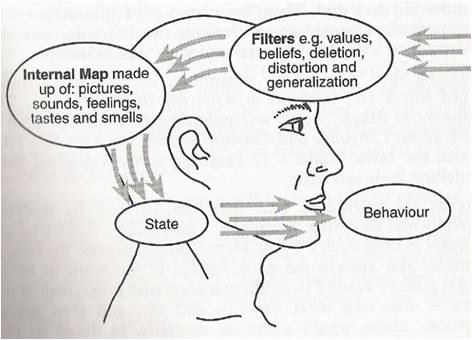
So the book’s on order because for me, I can’t wait to discover how these deep metaphors – so effectively filters, values or beliefs – can be shared across humankind if not from a deeper history or structuring.

What got me really excited in the Financial Times review was that ‘the Zaltman’s  explain that “deep metaphors” are “unconscious viewing lenses” that help us to structure what we think, hear, say and do’

So in NLP terms, it sounds like the existence of pre-loaded or early-formed metaprogrammes? So if businesses or advertisers play to, and align with these ‘giants’ in their advertising they have the ability to place their products within a pre-built structure.

Post Navigation